In her acclaimed book-length essay, Same River, Twice: Putin's War on Women, the award-winning Finnish-Estonian writer Sofi Oksanen warns that misogyny is a foundation of state power in Russia, where traditional values are used to silence women and domestic violence legalisation has been relaxed. However, its goals are much broader: its international aim is to offer empathy and a spiritual haven for authoritarian rulers and misogynists around the world, threatening the rights of women and minorities globally. In Ukraine, misogyny is an instrument of war, and sexual violence perpetrated by Russian soldiers has genocidal intent, Sofi Oksanen tells EESC Info.
Same River, Twice intertwines your family’s history with a century‑long pattern of Russian aggression toward women. How does this personal historical lens help us understand the continuity of misogynistic state violence, and what responsibilities do you think the international community bears in confronting this legacy?
One thing is that I took seriously the changes in Russian legislation, for instance. At the same time, it seems not even Russians themselves really understood them, and many were confused, but that was exactly the point.
For instance, the gay propaganda laws and foreign agent laws: they are all rather vague, and I remember many people in the West even laughing at them, because they were so weird.
Even Western media seemed to consider them somehow toothless. But these laws did not precisely define what could be said or shown. That was precisely why they were effective: the possibility of arbitrariness was part of their mechanism. If the authorities wished, they could use the law against virtually anyone. For the LGBTQ+ community, the law signalled that visibility was a risk. And when the visibility of a certain group becomes a risk, the next step is to broaden this practice to another group. And another group. And another group.
The oppression of sexual and gender minorities must be seen as part of a broader whole. It is not merely a matter of the mistreatment of particular groups of people, but of humanity as such. Throughout history, persecution has first targeted the most vulnerable group. The repression has then been expanded until it has come to affect all citizens.
When the legal protection of Russian women was relaxed, others in the West, I guess, thought it didn't concern them.
When they started to hail Stalin as a great leader, others in the West, I guess, thought it didn't concern them.
When they started to distort history, others in the West thought it didn't concern them.
Until it did.
To me, all this also tells us that in the West, Soviet history is not well enough known. Or what would the West have said if Germany had suddenly had a leader with a Gestapo-background?
Yet, it was totally fine that the Russian Federation suddenly had a KGB man as president.
The only way to stop this tradition of violence is to stop Russia's impunity.
At present, 'peace talks' don't really touch much on this issue.
If that is the case, sustainable peace is just a dream.
Your essay argues that misogyny is a core pillar of Putin’s regime. Could you walk us through how this misogyny is woven into the state’s ideology and institutions, and give concrete examples of how it shapes policy and propaganda?
Russia is not alone in its misogynistic project: its international aim is to offer empathy and a spiritual haven for authoritarian rulers and misogynists of the world. Even in the most egalitarian democracies, there is misogyny, homophobia and racism. Russia empowers and supports those who hold these opinions, incubating like-minded communities abroad. So, this is its aim on the international scene, and this is a key component of its foreign policy.
The Soviet Union had an ideology to export and expand its influence abroad. Communist ideology might sound attractive on paper. But now Russia is in a different position, and it has understood that misogyny is, for them, a good export product. In domestic politics, the very same misogyny is used to keep women out of positions of power (see more below).
In 2017, domestic violence was essentially legalised when the legislation addressing it was relaxed.
The Orthodox Church has campaigned strongly for these amendments.
Patriarch Kirill has declared that the criminalisation of domestic violence was a foreign invention.
And then there is the education system supporting the gender roles and ideas blessed by the Kremlin.
The foreign agent law is another instrument, branding NGOs, human rights organisations and women's rights organisations as unpatriotic foreign agents.
All this sends a clear message about what a proper patriot looks like: a victim-shaming bully.
In Ukraine, misogyny is an instrument of war, colonisation, and imperial aims. It's a cheap weapon, and efficient.
In what ways does the targeting of women reinforce Putin’s consolidation of power domestically?
It keeps women out of all the places where there's power. It makes sure women stay out of politics, economic power and public forums in general. The only women who are allowed to enter the public sphere are the ones supporting Putin's regime, like Maria Lvova-Belova, who is in charge of deporting Ukrainian children to Russia and their naturalisation as Russians.
In general, studies show that online hate speech targeting women makes women more hesitant to enter public discussions. In Finland, studies have shown that online hate speech already makes women less willing to enter local politics, jobs related to legislation, journalism and so on. If this is the effect of gendered hate speech in Finland, one of the most gender-equal countries in the world, what is the impact on a country where gender equality as such is considered a Western export product, corrupting Russian values?
The gender roles supported by the Kremlin in Russia are based on patriotic, military thinking, where women are supposed to stay at home and deliver babies.
At the same time, Western leaders are targeted by very misogynistic disinformation campaigns: in the Russian public sphere there's no space for positive female role models supporting gender equality.
You describe the sexual violence perpetrated by Russian forces as a ‘systemic and genocidal’ tactic. How does the regime deliberately employ rape and other gender‑based crimes to achieve military and political objectives, and what impact does this have on Ukrainian communities?
What we know from previous wars is that the better command responsibility an army has, the better it is for women, or civilians in general. So, not all armed forces rape and torture civilians - they will not do it if they are not allowed to, or if there's punishment for these actions.
In the Russian army, there's a tradition encouraging looting, torture and sexual violence targeting civilians. If previous generations have never been held accountable for these crimes, how could the present generation even think they could be held responsible for them?
Over 90 percent of Ukrainian prisoners (including civilians) are tortured in Russian captivity. The methods used keep repeating the same patterns and tools, they seem to be especially keen on torture with electricity, and the same methods are used against women and men alike. Torturing genitals is common.
Rape is genocidal when you can show genocidal intent and motivation: castration is quite clearly genocidal. If you harm someone's genitals in a way that might affect their ability to have children, it's genocidal. Many witness testimonies describe how Russian soldiers comment on their sexual violence by saying sentences like: 'We'll rape you until you don't want to have sex with Ukrainian men anymore', or 'You won't be able to bear more Ukrainian babies into this world', and so on.
The main goal of the Kremlin is to destroy Ukraine as a nation, and a nation is destroyed by destroying communities and families, and that is exactly what sexual violence does.
Sexual violence can also be seen as biological colonisation as one of the consequences is the number of children born out of rape.
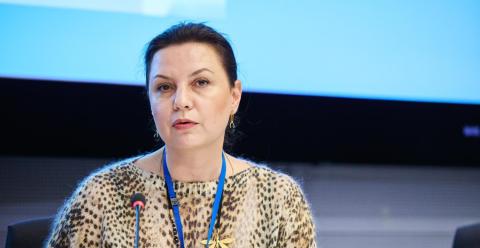
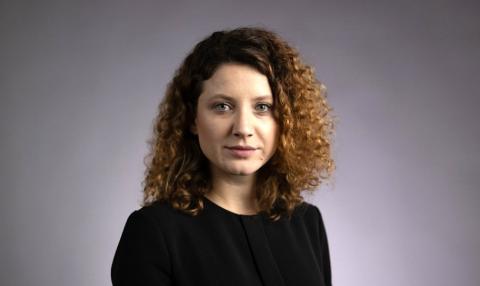
Finnish-Estonian novelist, librettist and playwright Sofi Oksanen is one of the most awarded literary authors in Scandinavia. Her books have been translated into 46 languages and sold in more than two million copies. She gained international fame with Purge, a play turned novel and later adapted into both film and opera. Critics hail her as a mistress of human drama, who incorporates historical and contemporary issues that move the reader. Her most recent work is Same River, Twice: Putin’s War on Women, a literary essay on colonialism and oppression, women, and war.