About the Committee

EESC mission statement

Committed to European integration, the EESC contributes to strengthening the democratic legitimacy and effectiveness of the European Union by enabling civil society organisations from the Member States to express their views at European level. This Committee fulfils three key missions:

  • helping to ensure that European policies and legislation tie in better with economic, social and civic circumstances on the ground, by assisting the European Parliament, Council and European Commission, making use of EESC members' experience and representativeness, dialogue and efforts to secure consensus serving the general interest;
  • promoting the development of a more participatory European Union which is more in touch with popular opinion, by acting as an institutional forum representing, informing, expressing the views of and securing dialogue with organised civil society;
  • promoting the values on which European integration is founded and advancing, in Europe and across the world, the cause of democracy and participatory democracy, as well as the role of civil society organisations.

Working of the EESC

The European Economic and Social Committee (EESC) is a consultative body that gives representatives of Europe's socio-occupational interest groups, and others, a formal platform to express their points of views on EU issues. Its opinions are forwarded to the larger institutions - the Council, the Commission and the European Parliament. It thus has a key role to play in the Union's decision-making process.

Presidency

President

Vice-President - Communication

Vice-President - Budget

Origins

The ESC was set up by the 1957 Rome Treaties in order to involve economic and social interest groups in the establishment of the common market and to provide institutional machinery for briefing the European Commission and the Council of Ministers on European Union issues.

The Single European Act (1986), the Maastricht Treaty (1992), the Amsterdam Treaty (1997) and the Treaty of Nice (2000) have reinforced the EESC's role.

Membership

The 344 members of the EESC are drawn from economic and social interest groups in Europe.

Members are nominated by national governments and appointed by the Council of the European Union for a renewable 5-year term of office. The latest renewal was in October 2010 for the mandate 2010-2015.

They belong to one of three groups:

  1. Employers
  2. Workers
  3. Various Interests
  • Germany, France, Italy and the United Kingdom have 24 members each
  • Spain and Poland have 21
  • Romania has 15
  • Belgium, Greece, the Netherlands, Portugal, Austria, Sweden, Czech Republic and Hungary and Bulgaria 12
  • Denmark, Ireland, Finland Lithuania and Slovakia 9
  • Estonia, Latvia and Slovenia 7
  • Luxemburg and Cyprus 6
  • Malta 5

The Members' mandate

The task of members is to issue opinions on matters of European interest to the Council, the Commission and the European Parliament.

Advisory role

Consultation of the EESC by the Commission or the Council is mandatory in certain cases; in others it is optional. The EESC may, however, also adopt opinions on its own initiative. The Single European Act (17.2.86) and the Maastricht Treaty (7.2.92) extended the range of issues which must be referred to the Committee, in particular the new policies (regional and environment policy). The Amsterdam Treaty further broadens the areas for referral to the Committee, and allows it to be consulted by the European Parliament. On average the EESC delivers 170 advisory documents and opinions a year (of which about 15% are issued on its own-initiative). All opinions are forwarded to the Community's decision-making bodies and then published in the EU's Official Journal.

Information and integration role

Over the last few years the EESC has stepped up its role in the European Union and has transcended the straightforward duties flowing from the Treaties. It acts as a forum for the single market and has hosted, with the support of other EU bodies, a series of events aimed at bringing the EU closer to the people.

Internal organization

1. Presidency and bureau

Every two and half years the EESC elects a bureau made up of 37 members, and a president and two vice-presidents chosen from each of the three groups in rotation.

The president is responsible for the orderly conduct of the Committee's business. He is assisted by the vice-presidents, who deputize for him in the event of his absence.

The president represents the EESC in relations with outside bodies.

Joint briefs (relations with EFTA, CEEC, AMU, ACP countries, Latin American and other third countries, and the Citizens' Europe) fall within the remit of the EESC bureau and the president.

The bureau's main task is to organize and coordinate the work of the EESC's various bodies and to lay down policy guidelines for this work.

2. Sections

The Committee has six sections:

  1. Agriculture, Rural Development and the Environment (NAT)
  2. Economic and Monetary Union and Economic and Social Cohesion (ECO)
  3. Employment, Social Affairs and Citizenship (SOC)
  4. External Relations (REX)
  5. The Single Market, Production and Consumption (INT)
  6. Transport, Energy, Infrastructure and the Information Society (TEN)

A new Consultative Committee on Industrial Change has been incorporated into the EESC structure following the expiry of the ECSC Treaty in July 2002 (CCMI)

3. Study groups

Section opinions are drafted by study groups. These usually have 12 members, including a rapporteur. Study group members may be assisted by experts (normally four).

4. Sub-committees

The EESC has the right to set up temporary sub-committees, for specific issues. These sub-committees operate on the same lines as the sections.

5. Plenary session

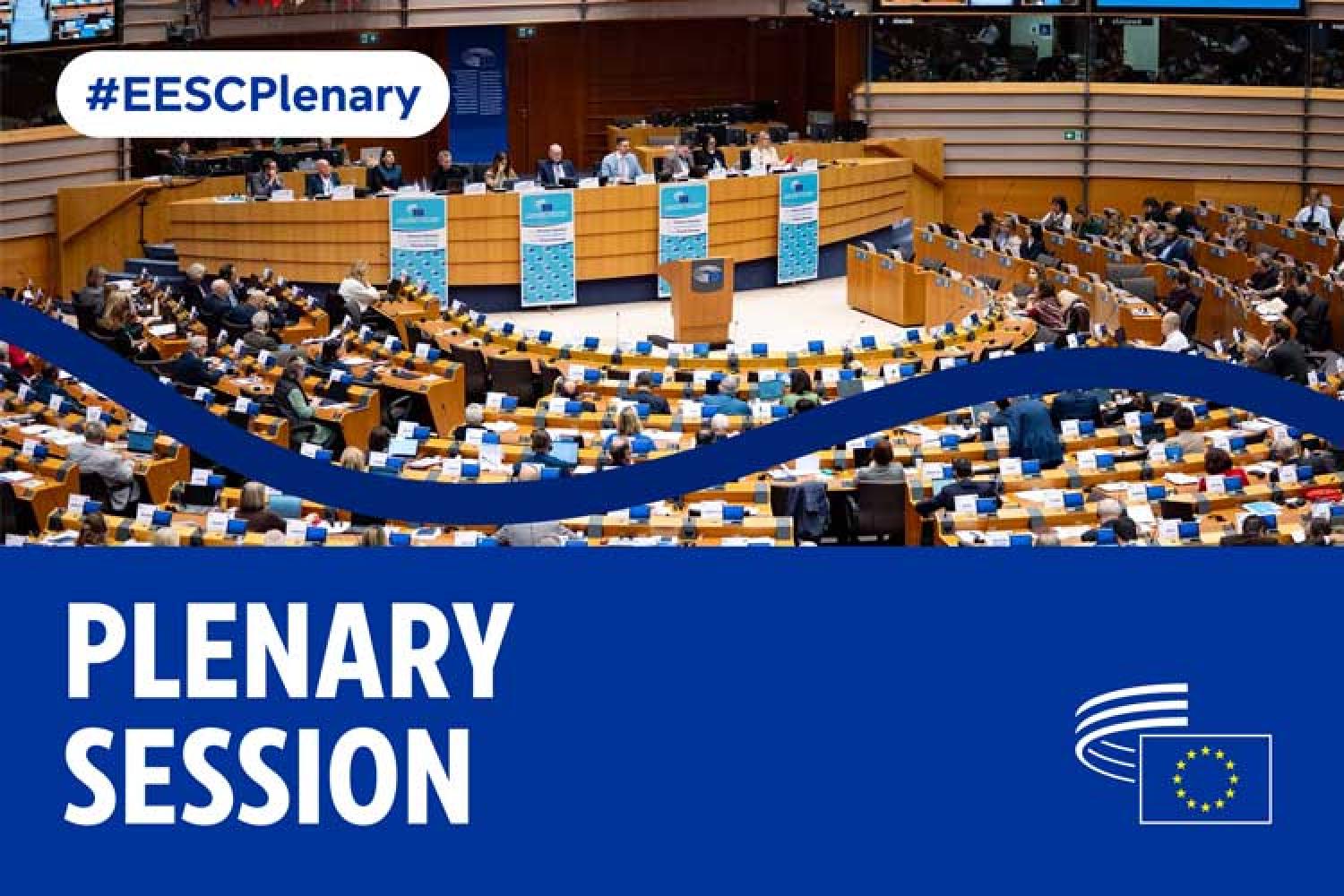
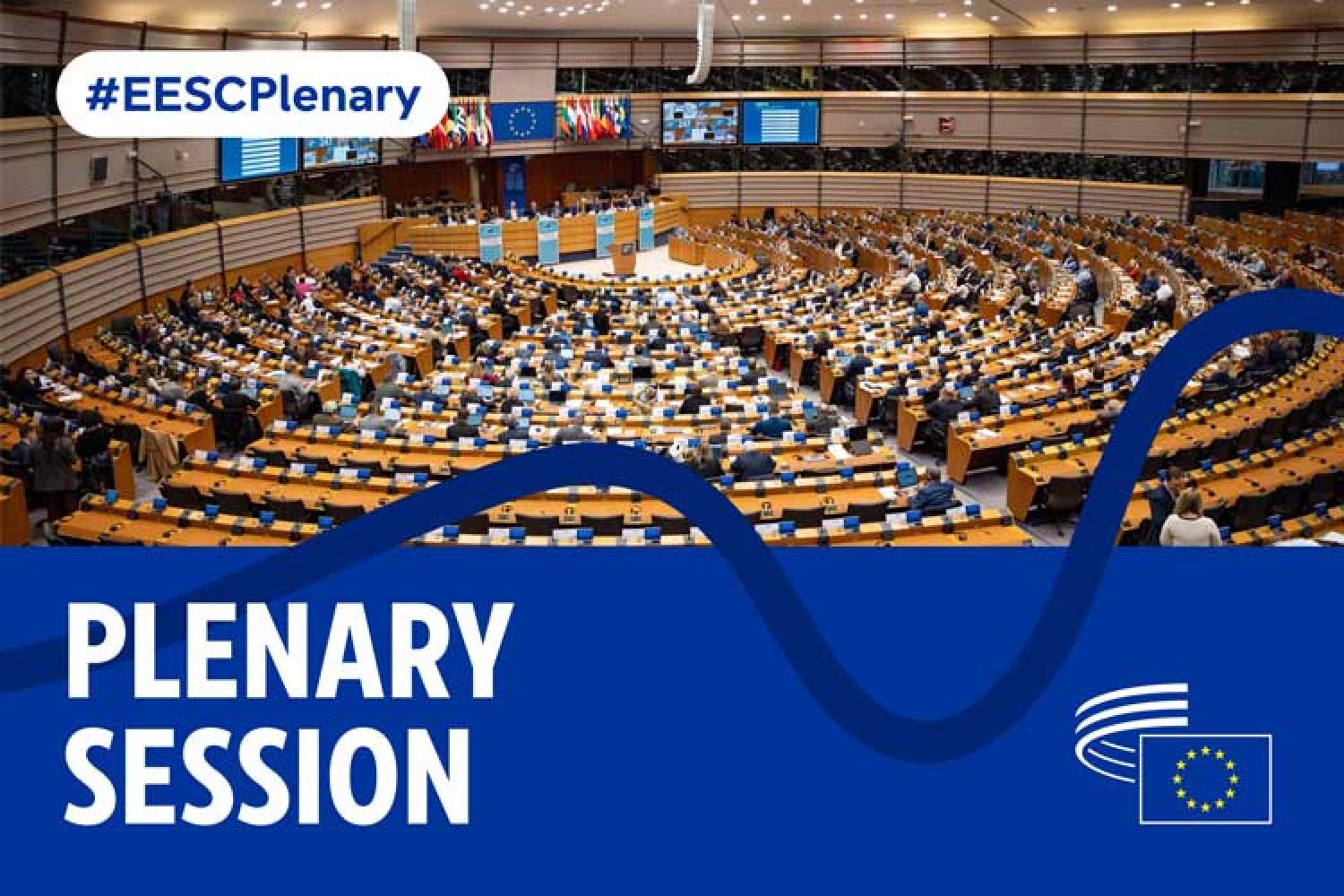
As a rule, the full Committee meets in plenary session nine times a year. At the plenary sessions, opinions are adopted on the basis of section opinions by a simple majority. They are forwarded to the institutions and published in the Official Journal of the European Communities.

Relations with economic and social councils

The EESC maintains regular links with regional and national economic and social councils throughout the European Union. These links mainly involve exchanges of information and joint discussions every year on specific issues.
The EESC also liaises world-wide with other economic and social councils and similar organizations at the "International Meetings" held every two years.

Relations with economic and social interest groups in third countries

The EESC has links with economic and social interest groups in a number of non-member countries and groups of countries, including Mediterranean countries, the ACP countries,Eastern Europe, candidate countries, Latin America, India, China, etc.

For this purpose the EESC sets up, within its External Relations Section, follow-up committees and joint consultative committees, which meet regularly their partners in order to debate on issues of common interest and submit joint proposals to the political authorities

Publications

The EESC regularly distributes a number of publications, including its main opinions in brochure format, a monthly newsletter (CESE Info), a monthly Bulletin summarizing all opinions adopted by the Committee, and its annual report.

Secretariat-General

The Committee is serviced by a secretariat-general, headed by a secretary-general who reports to the president, representing the bureau.

Some 800 staff members work at the European Economic and Social Committee. Since 1 January 1995, the European Economic and Social Committee and the Committee of the Regions have shared some services, such as logistics, IT and translation.

Annual Activity Report

This Final Annual Activity Reports have been drafted in accordance with the Financial Regulation and are the main yearly reporting tools used by the European Economic and Social Committee in order to report to the budgetary authority. The reports are distributed to the European Commission and to the Court of Auditors. The European Commission forwards them to the budgetary authorities, the Council and the European Parliament.

Blogs

RSS Feed
  • 25 stories told by 25 active citizens

    • 11 Feb 2013
      A commitment to make life better

      “In Germany we have lots of experience of the breakdown of the German Democratic Republic, and all the trouble that it brought. I tried to apply that experience to the process of enlargement, together with colleagues from the newer Member States.”
      He argues that promoting European unity and solidarity is particularly relevant to German citizens. “Germany caused a lot of problems and suffering in the rest of Europe during World War II,” he explains. “That is not forgotten. We still have an open commitment to fulfil.”

  • Blog - EESC go to Durban

    • 9 Dec 2011
      Good-bye Durban (being optimistic)
      Head of the EESC delegation, hard at work

      The Durban-negotiations may end up with concrete measures to fight climate change, or maybe Roadmaps for individual countries, or with improvements of the Climate Fund - or with just diplomatic talk and no concrete results. The final results will only be known when we are on the plane, going back.

  • Blogging from Doha

    • 10 Dec 2012
      Thoughts after Doha 2012

      In this post, Ms Slavova gives us two perspectives of the outcome of the Climate Change Conference: the disappointment of environmental advocates, but also the significant steps achieved in Doha.

  • Staffan Nilsson's Comment (former EESC President 2010-2013)

    • 12 Apr 2013
      Citizens' initiative- have you signed up to it?

      For the past year Europeans have been able to exercise a new EU right: the right to propose legislation on matters where the EU has competence to legislate, on condition that the initiative is backed by at least one million citizens from seven EU Member States. The challenges and the struggles which initiators face (the online signature collection system, data protection, language barriers and different national verification requirements) are symptomatic of the state of European integration. Some may disagree, but I think more integration makes for a more democratic EU. The further the EU moves towards integration, the easier it will be to get such transnational initiatives off the ground. The European citizens' initiative (ECI) is an ideal adjunct to – and indeed a consolidation of – the EU's system of representative governance. So have you signed up to any yet? Take a look at the list of all citizens' initiatives registered here.

  • The President's blog

    • 13 Jun 2013
      Never use the expression "lost generation" in my presence!

      Never use the expression "lost generation" in my presence, when speaking about the young Europeans of today! It is up to us, the representatives of European and national institutions, to make visible all that Europe has achieved and what it can afford today.

RSS Feed View All

Documents & Publications

RSS Feed View All