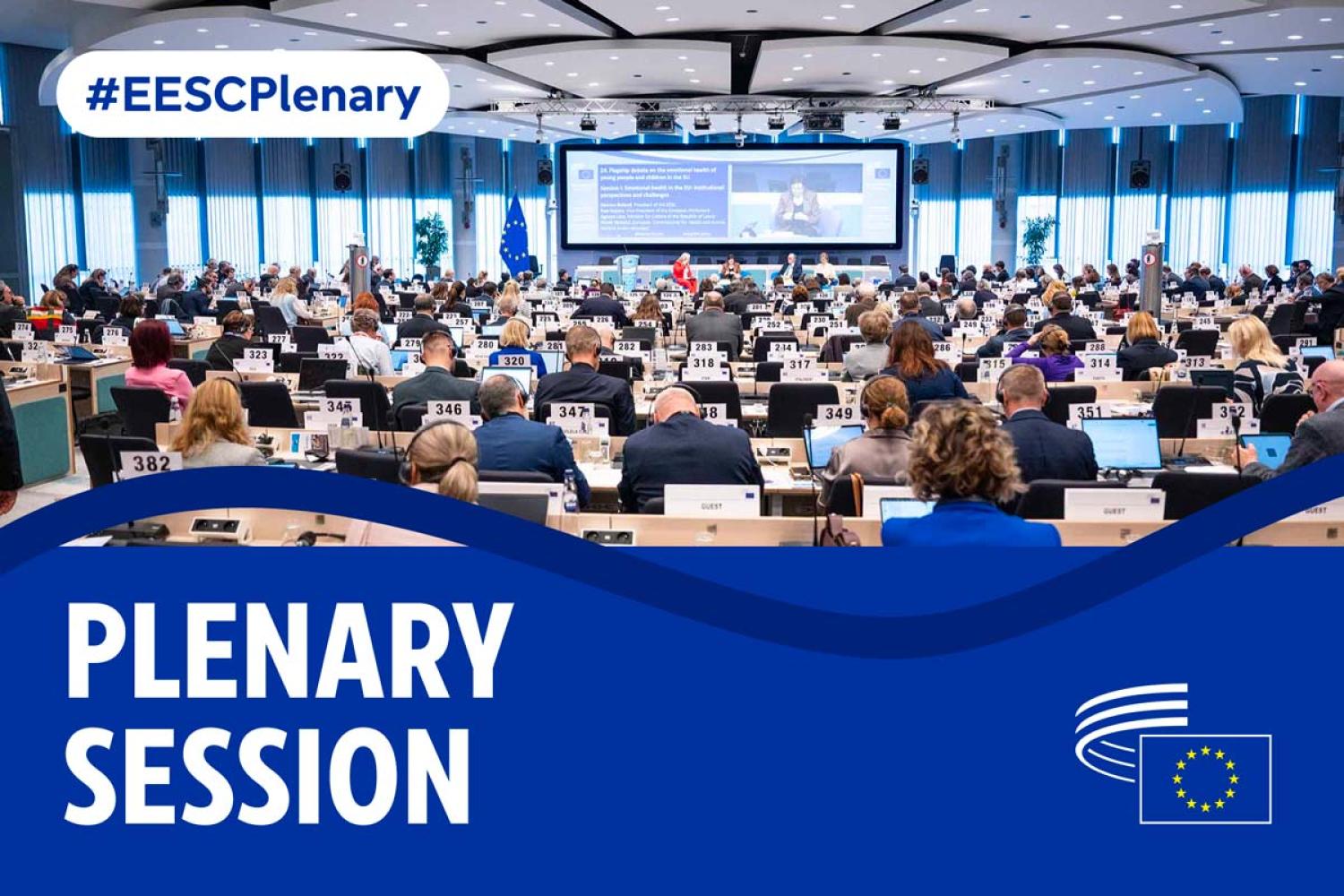
Just imagine getting on a train in Brussels and getting off in Porto or in Helsinki, without having to change anywhere. Imagine that this would be a more affordable option than the plane and that it would save you much more time than if you took the car! Well, this is my vision for an EU Single Market transport area in 2050 or even earlier. The EU has given citizens freedom of movement – but now they need the means of transport to move quickly and easily throughout Europe. In the midst of the eurocrisis summit discussions, we met at the EESC for our plenary this week and dared to think beyond the crisis. One of the issues we dealt with was envisaging a functional, sustainable model for European mobility beyond 2020 and up to 2050.
Read More...On the margins of the European summit on Sunday 23 October, David Cameron declared that it was in United Kingdom's interest that the eurozone countries sort out their problems, but that it would become dangerous if they started to take decisions on issues, such as financial services, that were vital to other Single Market countries and the Single Market as a whole. What shocks me is the incredible inconsistency of these leading players, who appear to be either unaware of or unwilling to recognise the huge contradiction in what they are saying. They want more Europe - with further development and strengthening of the internal market, business exchanges and non-eurozone countries being involved in decisions concerning the eurozone - and, at the same time, less Europe - with cuts in the budget, when what we need to overcome the crisis is a stronger cohesion policy, more funds to boost Europe's competitiveness and a referral to enter the euro zone.
Read More...Recently I have been involved in a whole series of activities related to our partnership with the eastern countries. I am thinking of European Council president Van Rompuy's invitation to the EESC, one voice of organized civil society in the EU, to participate in the Eastern Partnership (EaP) Summit, which I greatly appreciate. If the EU is ever accused of not "walking the talk", then this is one case when its critics are wrong. For me this was indeed good practice of civil society involvement at the highest political level possible. European Commissioner Füle's constant attention to our recommendations on ways to strengthen civil society in our eastern neighbouring countries is further proof that, without social partners and civil society organisations on board, our relations and work with the EU's eastern neighbours would go no further.
Read More...Members of the European Parliament meeting last week in Strasbourg gave a rousing reception to José Manuel Barroso's State of the Union address. That this should happen was by no means a foregone conclusion. For me, it is a signal. The elected representatives of 500 million Europeans express what the public is thinking, and public opinion – frequently based on poor or indeed erroneous information – is inclined to be inward-looking. The knee-jerk reaction tends to be protectionist and Eurosceptic. In essence, Mr Barroso was saying: No, Europe is not the cause of all your woes.
Read More...