L'esprit d'entreprise en Europe

6 Apr 2012

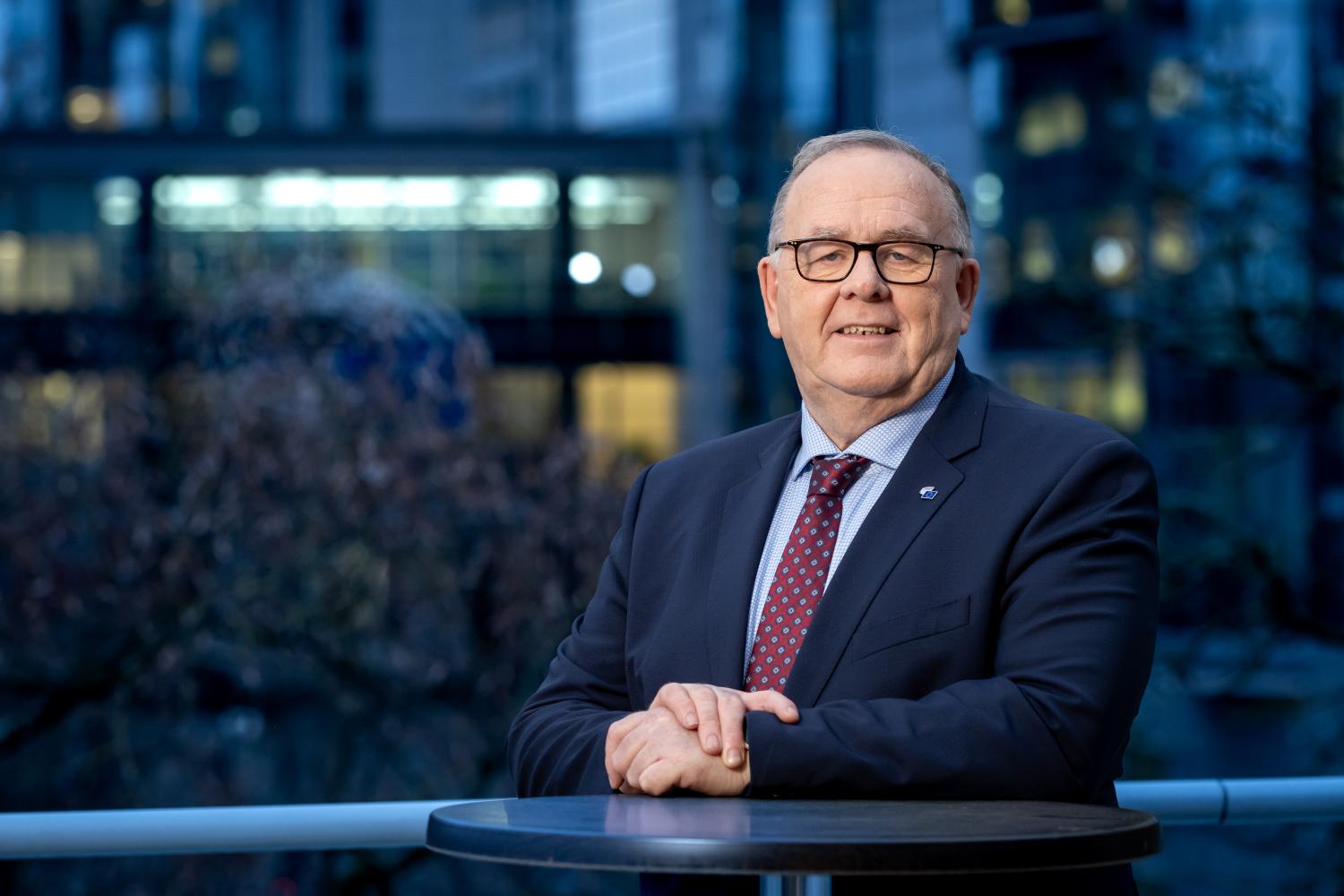
Before becoming President of the Employers Group of the EESC, Henri Malosse was President of the EESC’s SOC and ECO sections, and was Co-President of the EU-Bulgaria Joint Committee, as well as member of the EESC Bureau. He is the Vice-President and founding member of the European Association of SMEs, SME Union in the European Parliament. He also lectures on European affairs at several European universities.

Q1. How long have you been fighting the corner for SMEs?

I have actually been working to improve conditions for SMEs for 30 years at European level. 20 years ago I initiated the SME policy of the European Union and created- as Adviser to the new European Commissioner, nominated for SME Abel MATUTES in 1987- the European Information Centre- providing information for SMEs in the European single market.

This is now known as EEN, the Enterprise Europe Network. I continually promote the network which provides advice and opportunities. It is a one stop shop for SME advice on all European Union questions, representing 80 per cent of business regulations and opportunities in all the countries of the European Union.

Today there are 235 EEN members covering all European regions, located in chambers of commerce and development agencies. They also provide information on possible partners through Europe, providing a network.

They employ more than 1000 people, mainly young women and men, multilingual, motivated and business friendly. This is something I am very proud of, although this network should be more known and used among SMEs.

In the last 5 years as President of the EESC’s Employers Group I have helped the group focus on two specific aspects.

Firstly, we are working with the EU to successfully implement the European Small Business Act. The act is in its third year but still requires a lot of input from us to ensure it has the desired effect. Under it, any European legislation should consider the concerns of small businesses as a priority. Previously big businesses were favoured by legislation.There is a similar act to this in the US.

Our current project with the Act is to ensure national governments within the EU simplify their legislation and implement the Act. The principle is “think small first”.After all, 99 per cent of all European businesses are independent and employ fewer than 250 people.

The second aspect of what we are doing currently involves a seminar in Brussels for young European entrepreneurs, currently in its third year. We invite those from all over Europe seeking to create their own businesses, giving them concrete, practical information and a network of help. We have also created, with Madi Sharma, a website for young entrepreneurs, giving them easy access to practical information; how to get funding, and develop contacts, for example. This will improve the development of young entrepreneurs in Europe.

Q2. Has your work with the UK Government resulted in any major obstacles?

All governments give support in principle. It is the implementation that is a problem. Mainly in the big countries like UK or France where there is a huge bureaucracy and tendency to privilege the big companies. What happens is the executives of large businesses have personal friendships with many politicians and policy makers which can often stretch back to their university years. This gives them an unfair advantage in influencing legislation.

The UK Government is doing a good job overall and the EESC’s initiatives exist to help them tap into the SME sector which, for them, like many governments, is a largely unknown world.

Q3. Can big businesses play a role in helping small ones?

No. It is not in their remit. They operate under totally different models. Small businesses need a free spirit to operate. They need to work together. In doing so they can find a voice and become a force to be reckoned with. SMEs need to help themselves.

Q4. Does Europe have a cultural appreciation of entrepreneurialism, or is it something that still mystifies us?

I don’t think Europeans are less entrepreneurial than anybody else. However, the spirit of entrepreneurialism is not expected within the education system but this is not necessarily a problem.

Such a spirit is developed throughout life. What we need to do is help people recognise that innovation is pregnant everywhere, in very simple things.

It does not have to be in the latest groundbreaking digital technology. It could be in food packaging or even within the baking of bread. Take the bakery Paul’s as an example. It started out as one shop in France and now has bakeries globally. The innovation came in their production of bread.

Also, if we want entrepreneurs to be seen as role models for young people, they should be more ethical. Unfortunately we have bad examples every day in the media. This is the reason why my actual priority is to focus on social responsibility of entrepreneurialism and to promote a European charter on ethics for European employers. This would be, in my opinion, the best way to promote entrepreneurship among the young European generation because they put ethics as a priority in their life.

Détails
Média Smediscounts.com blog - Interviewé par Nafees Mahmud
Interviewé Interview de Henri Malosse, Président du Groupe Employeurs, CESE

EU Feeds

Dernières nouvelles des autres Institutions Européennes


Read more on the Europa website.