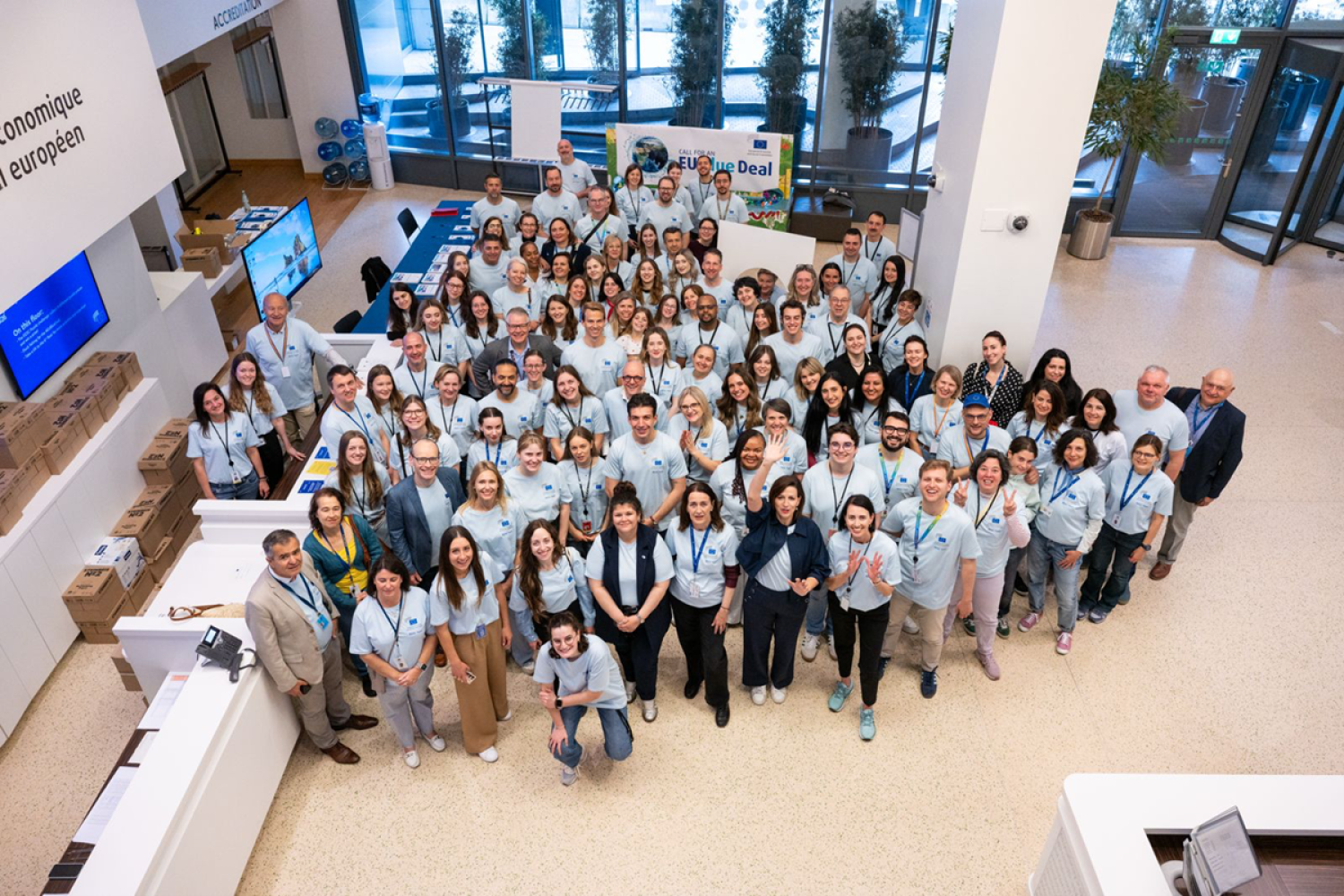
Bringing Rio Home - Rio+20 Debriefing SessionEESC, Brussels, Belgium Public meeting of the Sustainable Development Observatory.
The road from Rio is as important as the road to Rio. Coming back from Rio the EESC wants to take Rio home and contribute to the implementation of Rio results and discussions, in particular in the European Union.
European Consumer Day 2012Sustainable consumption in a time of crisis Conference -
Copenhagen, Denmark The 14th edition of the European Consumer Day, organised together with the Danish Consumer Council, was held in the premises of the European Environment Agency in Copenhagen, and focused on sustainable consumption.
8 Feb 2013 EESC opinion on the Annual Growth Survey 2013AdoptedReferences: CESE 2595/2012
Referral -
COM(2012)750 finalRapporteur: Xavier Verboven (Workers - GR II / Belgium) The 2013 Annual Growth Survey (AGS), which launches the European semester, sets out what the Commission believes should be the overall budgetary, economic and social priorities for the this year.
Given the importance of the involvement of the organised civil society and the social partners in setting priorities for action at the national and EU level, the EESC issues its opinion as a contribution to the debates ahead of the Spring European Council.
Publications
Published In: 2012 6 pages Welcome to the city bees! In May 2012, the European Economic and Social Committee and the Committee of the Regions welcomed to their premises some unusual new partners: two beehives were installed on the Committees’ rooftop terrace. The initiative aims to increase urban biodiversity and sends a message of hope for the future of our bees and natural ecosystems.
Speeches
15 Apr 2013Organisation: EESC, Speaker: Staffan Nilsson Staffan Nilsson`s address at the UDI Congress France EESC members come from different organisations in EU Member States. As is the case in the French Council, while remaining actively involved in our organisations in our home countries, we travel regularly to Brussels to attend meetings. Internally the EESC is divided into six sections, each of which deals with a major EU policy area: economic and monetary union, the internal market, agricultural policy and the environment, employment and social affairs, transport and energy, and external relations.
In 2006 the EU's sustainability strategy was given a new impetus. In the EESC we decided to reflect the cross-cutting nature of sustainability in a separate body able to work in a cross-cutting way. We therefore set up a Sustainable Development Observatory with members from all sections, with a view to achieving a cross-cutting approach to the subject. As far as I can see, this is an unprecedented development in the EU institutional set-up.
6 Mar 2013Organisation: EESC, Speaker: Staffan Nilsson Staffan Nilsson`s address at the European civil society workshop on Sustainable Development Goals This workshop is exactly in line with what we had declared we would be doing to bring Rio home: we keep up the momentum for further promoting sustainable development, we want European civil society to be involved and we want to contribute with concrete proposals.
4 Mar 2013Speaker: Staffan Nilsson Brussels Policy Briefing: Agricultural resilience in the face of crises and shocks One in six people on our planet face a daily struggle to find enough food to live. Food insecurity is thought to affect, in one way or another, more than one third of the population of the ACP countries, mainly in rural areas. This is the reality we need to tackle. And since I am myself a farmer and engaged in farmers' organisations, agricultural resilience is an issue that lies particularly close to my heart.
4 Oct 2012Organisation: EESC, Speaker: Staffan Nilsson Joint seminar on Investment for economic growth, social inclusion and environmental sustainability The EESC agrees that investments are a tool to promote sustainable development. Nevertheless, there is a need to define the concept of these "investments favouring sustainable growth". In the EESC's views, those investments should, while keeping their economic value, cover basic social needs, increase welfare and social cohesion and at the same time avoid damaging the environment.